
I was seventeen the first time I saw a human heart beating inside someone's chest.
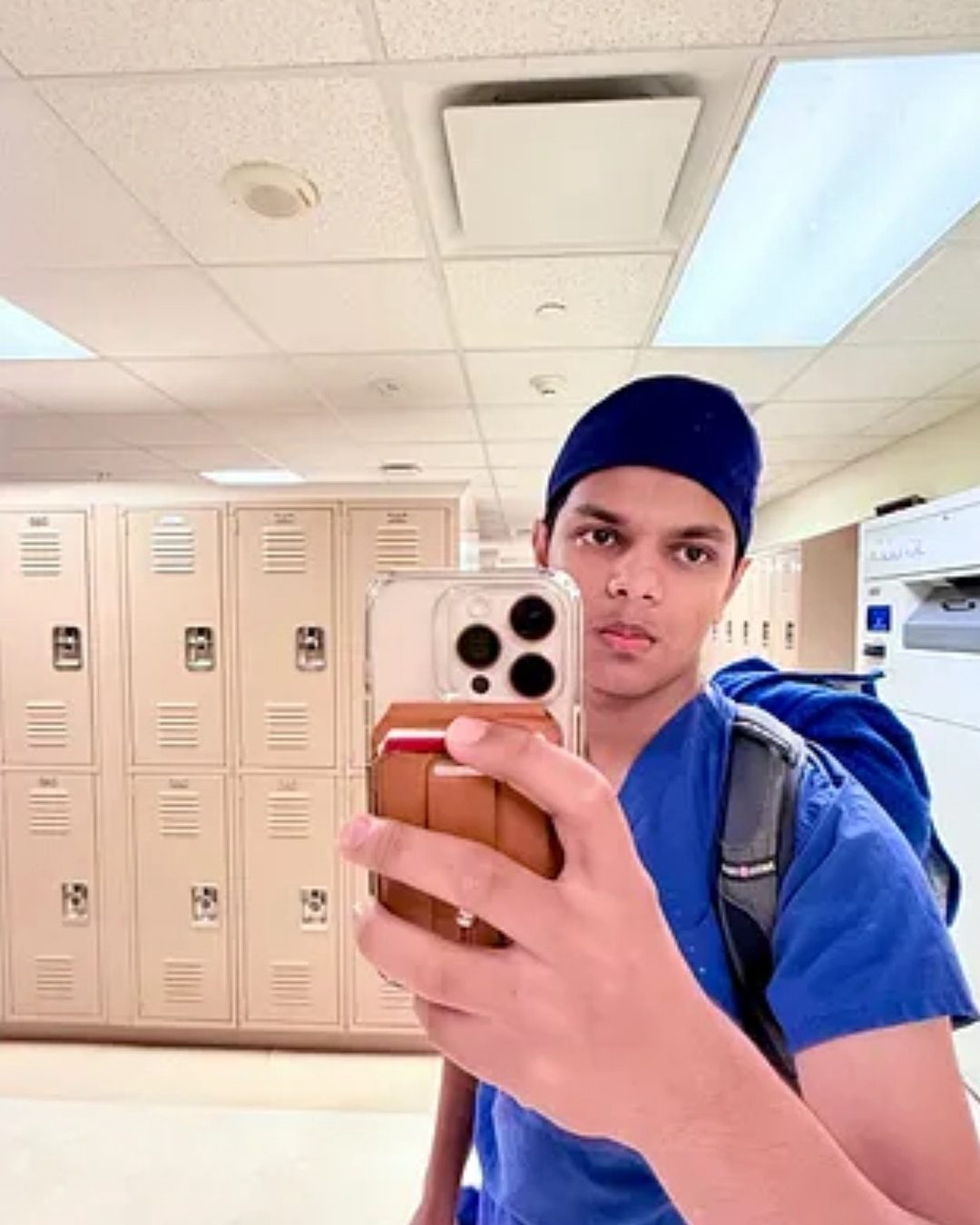
I was working in the OR as an anesthesia tech when I got pulled into a CABG case, a coronary artery bypass graft. Surgeons call them "cabbage" cases. I had no idea what I was about to see.
The cardiac anesthesiologist I was working with that day noticed my wide eyes from across the drape. Instead of sending me out, she leaned over and said, "Come here. Let me show you something."
It turned into the most unforgettable anatomy lesson I've ever had.
First, the sternum. A saw cuts straight down the center of the chest. The surgeons set a retractor, a heavy metal instrument that looks like a door hinge, between the two halves, and as they turn the wheel the chest slowly opens, layer by layer. The Bovie, an electrocautery tool, burns through tissue with a smell I still can't quite describe. And then, through the pericardium, you see it.
The heart. Alive, and beating.
Over the drape, the cardiothoracic surgeon walked me through all of it: the right and left atria, the pulmonary arteries, and the aorta, which is far bigger up close than any diagram prepares you for. He pointed to the coronary arteries, the ones they were there to bypass, and explained how something so small, only a few millimeters wide, can decide whether someone goes home to their family.
That hour gave me something no classroom could have. It's why I keep chasing experiences where I learn by doing and by seeing.
I think back to that day whenever I need reminding how much is at stake in a single life, and that I once got to watch a small miracle up close.